
Why Your IBS Flares Seem Random (They Probably Aren’t)

You eat the same breakfast of avocado and eggs on sourdough you had last week without issue, but by 10 a.m., you’re unbuttoning your jeans because you feel painfully bloated.
Sound familiar? You’re not alone.
IBS can feel unpredictable, turning every meal into a potential gamble. One day your gut is quiet, the next it’s in full revolt for no obvious reason. But while symptoms may seem random, they rarely happen without cause. Most flares have a pattern; it’s just that the trigger is often more complex than one single “bad” food. Once you spot those patterns, IBS starts to feel far more manageable.
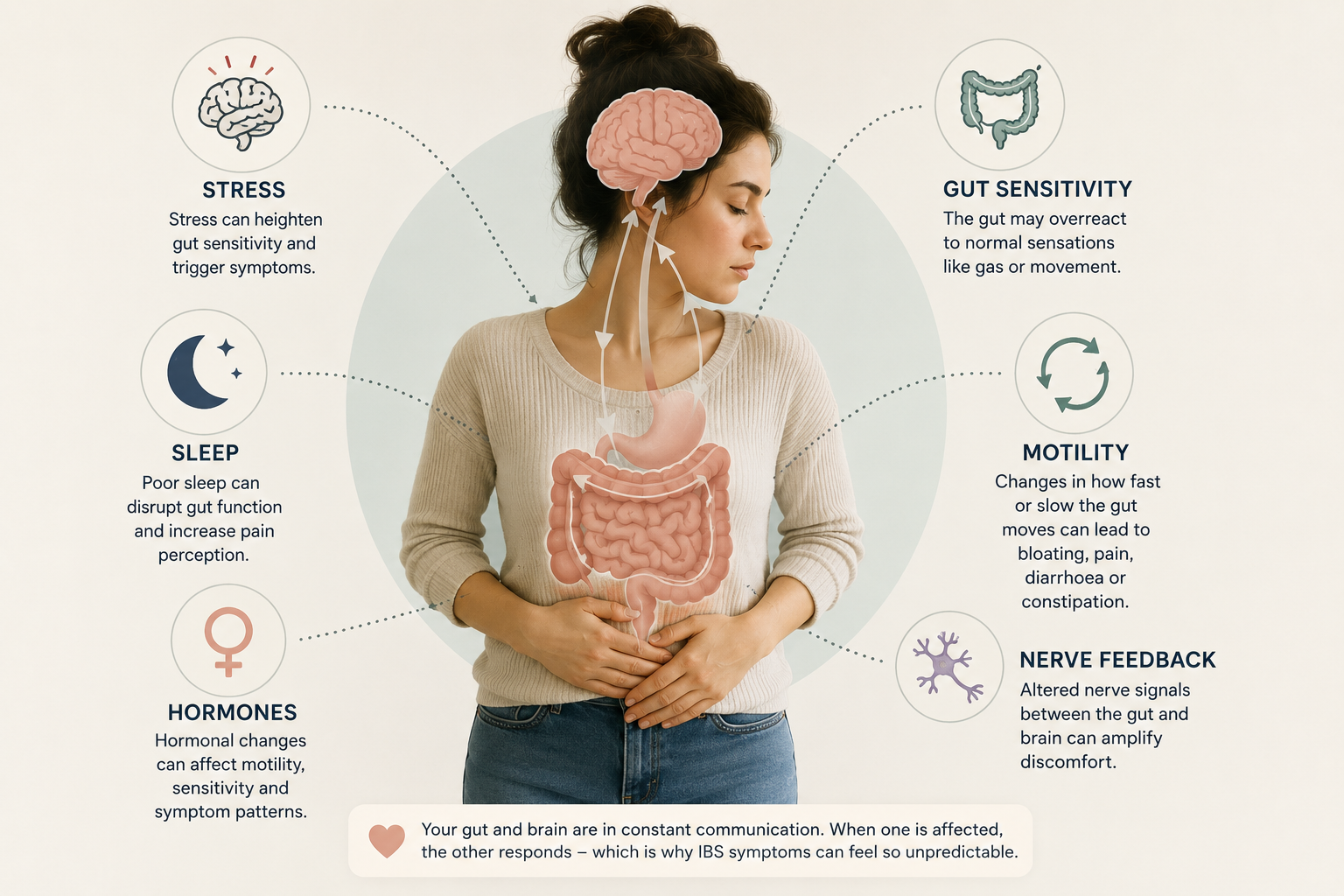
Why IBS Can Seem Random
IBS (irritable bowel syndrome) isn’t caused by structural gut damage. It’s a disorder of gut–brain interaction – meaning your digestive system and nervous system constantly influence each other. Symptoms such as bloating, pain, diarrhoea and constipation come from changes in gut sensitivity, motility and nerve feedback (Vasant et al., 2021; Ford et al., 2020).
In plain terms, your gut reacts to what’s happening in your body and life – your stress, sleep, hormones and daily rhythm.
Delayed and Cumulative Reactions
One of the biggest reasons IBS feels unpredictable is timing. Flare‑ups often lag behind the trigger.
Bloating might start hours after a meal, while bowel urgency can strike the next morning. It’s easy to blame the last meal you ate when the cause was actually lunch the day before.
For example:
- Lunch out Friday → bloating that evening
- Poor sleep Thursday → greater gut sensitivity Friday
- Stressful week → symptoms showing up on the weekend
When you only look at the last meal, you miss the overall pattern.
The Threshold Problem
Many people say: “I can eat this food sometimes, but not always.” That inconsistency usually means a threshold issue, not a strict intolerance.
IBS flares often happen when several smaller factors stack up:
- a night of poor sleep
- eating on the run
- higher stress
- mild constipation
- hormones in flux
- richer or larger meals
Each variable alone might be fine – but together they tip you over your personal threshold. That’s why the same food can feel harmless one day and disastrous the next.
Stress and the Gut
IBS symptoms are physical, but the nervous system sets the mood for digestion. Stress changes how fast the gut moves, how strongly it contracts and how sensitive it feels. It can increase perception of bloating, amplify pain signals and disrupt bowel rhythms (Ford et al., 2020).
It’s partly why people often notice flares during deadline weeks or travel, while holidays and weekends feel calmer, even with less “perfect” food. Sometimes it’s not the salad, it’s that you ate it mid‑email storm!
Hormones Add Another Layer
For many women, symptom patterns shift across the menstrual cycle. Hormonal changes influence bowel movements, bloating and pain perception. Flares often worsen:
- before or during the period
- in high‑stress hormonal phases
- around perimenopause
Tracking cycle phase alongside symptoms can reveal timing links that otherwise look random.
How You Eat (Not Just What)
Rushed eating is an underrated trigger. Common flares stem from:
- eating too quickly
- swallowing air while talking
- long meal gaps followed by large portions
- eating while tense or distracted
The same lunch eaten slowly at a table can feel entirely different from the same lunch eaten standing up between meetings. Your digestive system prefers “rest and digest,” not “scroll and chew” (I know we’re all guilty of this one!).
FODMAP Stacking
This is one of the most common pattern traps.
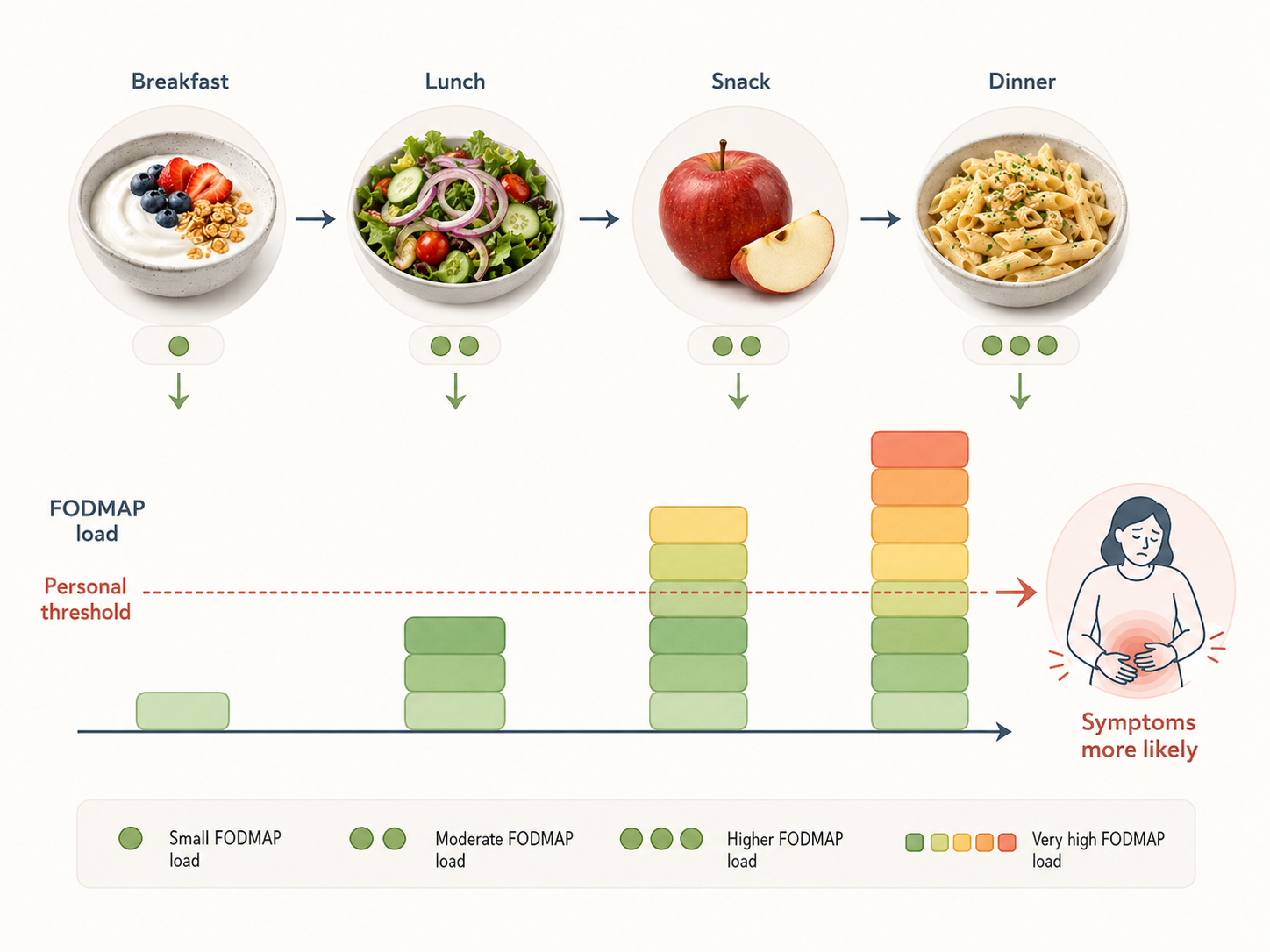
FODMAPs are fermentable carbohydrates found in foods like onions, garlic, apples, wheat, pulses and milk. They’re healthy but can be problematic for some people with IBS. The low‑FODMAP approach – supported by NICE and Monash University research – helps many reduce symptoms.
The complication? Stacking.
You might tolerate yoghurt at breakfast, onion in your lunch salad and an apple snack – but combine them with garlic pasta for dinner and you’ve gone over your personal threshold. The total FODMAP load matters more than any single food.
Constipation: The Hidden Driver
Even mild constipation can worsen bloating and discomfort, especially if bowels don’t empty completely. It can show up as:
- bloating that builds across the day
- early fullness or loss of appetite
- alternating loose and firm stools
Keeping things moving is central to calming IBS – hydration, fibre (to tolerance) and gentle movement all help.
Why Guessing Doesn’t Work
When symptoms spike, it’s tempting to eliminate the last food you ate. But memory is a terrible tracker. Research shows that dietary recall degrades over time (Baxter et al., 2004; Freedman et al., 2014).
We forget what we snacked on, how we slept, how stressed we were – or that three small triggers stacked up. So we end up blaming the wrong food and cutting more than necessary.
Turning Guessing into Data
Structured symptom tracking helps connect the dots. Apps like mySymptoms let you log meals, symptoms, stress, sleep, bowel habits and cycle phases (all the variables memory can’t juggle). Patterns that looked random start making sense:
- flares after poor sleep three days running
- symptoms peaking before your period
- discomfort on high‑FODMAP + high‑stress days
Often the insight isn’t a single trigger but recurring combinations.
Before You Cut More Food
If your IBS feels unpredictable, start with foundation habits instead of another restriction.
- Eat regularly. Long gaps and oversized meals increase symptoms.
- Slow down. Take time to chew and breathe, it reduces swallowed air and cramps.
- Support bowel regularity. Hydration, fibre, and routine matter.
- Prioritise rest. Consistent sleep and stress management calm the gut–brain loop.
- Track consistently. Look for timing and thresholds, not single foods.
If symptoms persist or interfere with daily life, work with a qualified healthcare professional. A tailored plan is often faster (and far less restrictive) than months of self-experimenting.
The Bottom Line
IBS flares might feel random, but most follow patterns hidden behind timing and context. Triggers are often delayed, cumulative and interactive: a combination of food, stress, hormones and habits.
Once you start seeing those links, IBS becomes less of a mystery and more of a map you can actually read.
Ready to connect the dots?
References
Baxter, S.D., et al. (2004). Accuracy of children’s dietary recalls compared with observed intakes over 24 hours. Am J Clin Nutr, 80(1), 43–49.
Freedman, L.S., et al. (2014). Pooled results from five validation studies of dietary self‑report instruments using recovery biomarkers. Am J Epidemiol, 180(2), 172–188.
Vasant, D.H., et al. (2021). British Society of Gastroenterology guidelines on the management of irritable bowel syndrome. Gut, 70(7), 1214–1240.
Ford, A.C., et al. (2020). Irritable bowel syndrome. The Lancet, 396(10263), 1675–1688.
National Institute for Health and Care Excellence (NICE). IBS in adults: diagnosis and management (CG61).
Monash University. Low FODMAP diet resources.
Important
mySymptoms is a food, symptom and lifestyle diary. It helps you record and review your own data — it does not diagnose, treat, cure or prevent any medical condition, and it is not a medical device. This article is general information, not medical advice. Always consult a qualified healthcare professional about your symptoms or before changing your diet.